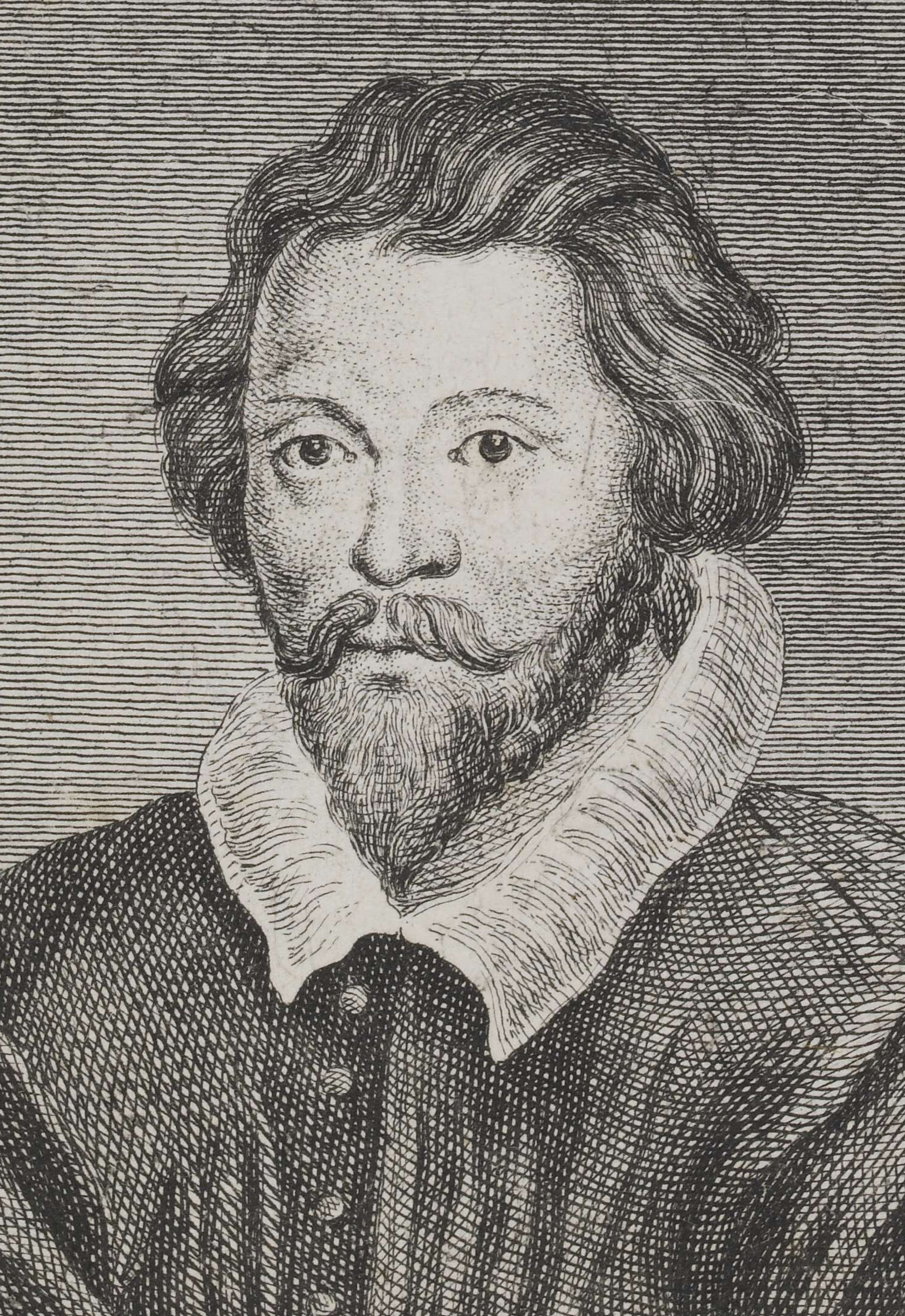
Little is know of Byrd's early life in London, or his early musical training, but his father was a musician. Byrd was a pupil of Thomas Tallis, and his first known professional employment was as organist and master of the choristers at Lincoln Cathedral in 1563. In 1568, Byrd married Julian Birley, and together they produced at least seven children. The 1560's were important and formative years for the composer, and many important works can be assigned to the Lincoln years, including the seven In Nomine settings for consort, at least one of the consort fantasias, and several important keyboard works including the A minor fantasia and the beginnings of Byrd's great series of pavans and galliards. Also, Byrd had begun setting Latin liturgical texts in his early years, and he seems to have continued to do so at Lincoln.
He remained in the post at Lincoln until 1572 when he returned to London, taking the post of chorister of the Royal Chapel, and sharing organ duties with Tallis. This career move gave vast opportunities to Byrd in terms of the scope of his composing. From the early 1570s onwards Byrd had become increasingly involved with Catholicism, and his commitment to the Catholic cause found expression in his motets, of which he composed about 50 between 1575 and 1591. He was also the first Englishman to write madrigals, a form which originated in Italy in the thirteenth century.
Byrd and Tallis shared a close personal and professional relationship, and in 1575 Queen Elizabeth I granted them a patent for the printing of music and rules music paper, for a 21 year duration. Their first work under this new decree was a collection of Cantiones sacrae dedicated to the queen - 34 motets of which Byrd contributed 18, and Tallis 16.
In 1577 Byrd and his family moved to Harlington, Middlesex, where they lived for the next 15 years. Byrd devout Catholicism probably influenced his preference for a more private and quiet life outside of London. In 1585 Thomas Tallis died, as did Byrd's wife a year later. Over the next three years he published four collections of his own music, namely Psalmes, Sonets, & Songs of Sadnes and Pietie (1588), Songs of Sundrie Natures (1589), and two further books of Cantiones sacrae (1589 and 1591). Both volumes of motets were dedicated to two prominent Catholics; the Earl of Worcester, friend and patron to Byrd, and Lord Lumley.
In around 1592 Byrd and his family moved for a final time to Stondon Massey in Essex, where he lived for the rest of his life. James' I ascension of the throne provided a more agreeable climate for Catholics, and in 1607 Byrd took the opportunity to compose and publish a comprehensive body of work for the liturgical repertory; three masses and two Gradualia. This provided material for the Catholic ordinary, and the proper for all main feasts.
Byrd died a wealthy man on 4th July 1623, and received a unique entry in the Royal Chapel Check Book as 'the father of musick'. His considerable output of around 470 compositions included motets, masses and psalms for both the Anglican and Catholic church, and hundreds of pieces for viols and keyboard. Byrd enjoyed a high reputation amongst other musicians, composers and writers of his day. Scribe John Baldwin who was among those who copied Byrd's music wrote:
'Yet let not straingers bragg, nor they these soe commende,
For they may now geve place and sett themselves behynde,
An Englishman, by name, William BIRDE for his skill
Which I shoulde heve sett first, for soe it was my will,
Whose greater skill and knowledge dothe excelle all at this time
And far to strange countries abrode his skill dothe shyne...'
Writer Henry Peacham praised Byrd's sacred music:
'For Motets and musick of piety and devotion, as well as for the honour of our Nation, as the merit of the man, I prefer above all our Phoenix M[aster] William Byrd, whom in that kind, I know not whether any may equall, I am sure none excel...'
Byrd has great influence on later composers, in large part due to his Catholic masses; his music certainly had an influence on Bach and Vivaldi. Ralph Vaughan Williams was influenced by William Byrd, as well as by later composers such as Stravinksy, Bach, Brahms and Debussy.
Gloria, from Mass for Four Voices
This was a very spiritual sounding piece, which is apt given its context. It was pleasant to listen to, but due to its being a sacred work, I think it would resonate more with a Catholic person, who would have an emotional connection to the text.
I heard some nice variance in the dynamics of the work, and the voices weave in and out of each other beautifully, but not as intricate as something you may hear from say the Baroque era. The text of the mass is in Latin, but I followed an English translation in order to get a fuller picture of the meaning of the work.
For My Ladye Nevells Grownde
This work for keyboard was longer than I expected, at around six minutes, but is comprised of several distinct and unique sections. There is extensive use of ornamentation, with several trilled notes in almost every bar. I enjoyed the scalic runs featured in this work, and the triplets section around half way through. I followed the score as I listened, but I'm not sure if this notation was how it was originally written, or if it has been 'translated' to modern notation. The score didn't have a key signature, but the accidentals seemed to be mostly F# and C#, and there was no time signature, but it appeared to be in 4/2. I enjoyed listening to this piece, and it's something I may well learn myself on piano.
The Battell: The Trumpetts
A short piece of only around a minute long, it featured a repeated left hand chord that created a drone effect, with the melody sounding clear above this, perhaps representing the titular trumpets. This uncomplicated and short piece is certainly effective at conjuring a picture in the listeners mind, although more could probably be gained by listening to all the pieces in 'The Battell'.
Though Amaryllis Dance in Green
I found this a light and uplifting madrigal. The voices overlap so much that I wasn't able to discern the words without following along with the text, but the upside was that it created a pleasant and complex musical texture that you could appreciate even if you wasn't able to understand the words. The high soprano in this piece was particularly enjoyable to listen to, as it soared above the rest of the voices.
Ave Verum Corpus
Another spiritual-sounding piece in Latin,a motet based on the text of a Eucharistic hymn, which deals with Jesus' sacrifice suffering. The sombre but reverent mood of the music fits this concept in the text perfectly. Like the Gloria above, emotional attachment to the meaning of the text is needed the fully appreciate the work, although you don't have to be religious to enjoy its velvety harmonies and smooth texture.

No comments:
Post a Comment