As I mentioned in a previous post, now that this course is officially completed, I have started my next two level one courses. As such, I'm having to carefully divide up my time between those courses, and my preparations for submitting this course for assessment. I have now completed my main revisions for assignment two, which looked at the development of serialism. I did a lot of research, and have expanded my original essay enormously, providing far greater detail and clarity. As well as improving my essay, it has also greatly improved my understanding of the compositional styles encompassed within the term serialism, and how it was influenced by previous developments, and how in turn it influenced following styles.
Soon I will be starting my revisions of the third assignment, in which I detailed the history and development of the pianoforte. Judging by my tutor's feedback, this should take considerably less time than my reworking of the serialism essay.
In terms of listening, I continue to listen to music extensively every day, becoming more familiar with some music as I discover new styles. At the moment I am listening to quite a lot of progressive metal (Dream Theater in particular), which is sometimes known as symphonic metal due to the longer than average track lengths, and classically-inspired form and instrumentation, and the unusual choices of keys and time signatures. I am also enjoying listening to electric blues and blues rock, and will soon hopefully own an electric guitar as I intend to learn to play blues guitar as well as learn songs of other styles. I can then take this skill and knowledge into my own compositions.
Tuesday, 26 November 2013

Karl Jenkins Conducts 'The Armed Man'
I wrote this up for my other course Composing Music, as officially this course From the Present to the Past is completed, however as I am still working on revising assignments and other things, I thought it would also be of benefit here.
On the 2nd of November I went to a fantastic local concert hall, Birmingham Symphony Hall, to see Welsh composer Karl Jenkins conduct his large choral work The Armed Man: A Mass For Peace. It is only relatively recently I have become more interested in choral works, but there are one or two famous movements within the mass that I consider among my favourite pieces of music, namely Agnus Dei and Benedictus. Extracts from some of Jenkin's other works were also being performed, including another favourite, Palladio.
Once I had booked the tickets, I spent the couple of weeks or so before the concert listening carefully to the complete The Armed Man in order to become more familiar with the whole work, and I also read programme notes and other articles to better inform myself. Aside from the clear enjoyment value of the concert, I thought it would be an opportunity to investigate a contemporary composer's use of instruments and form, both of which are pertinent to my course in composition. In particular I was paying close attention to the percussion elements within the music.
Jenkins juxtaposes traditional orchestral instruments, contemporary instruments and world instruments in his music. For example, the percussion parts included chimes, cymbals, side drum, timpani, congas, and drum kit along with many others. I enjoy a mix of colourful percussion in music, and it was especially prevalent in The Armed Man.
Some percussion highlights in the work include the very opening, which features a marching side drum rhythm alongside a lone piccolo, which sets the 'war' theme in motion perfectly. The repetitive rhythm continues as it is joined by brass and voices, and gradually builds in volume to ratchet up the tension.
In other movements such as Charge! and Sanctus, the composer uses percussion, usually one of the various membranophones, to keep an underlying beat, and to ensure the continuing forward momentum. It is an understated and minimal way of utilising percussion, but very effective.
Several of the other moments do not feature a regular percussive accompaniment like in the above, but instead Jenkins highlights the beginning or end of certain phrases or climaxes with a cymbal crash, and/or timpani roll, or use of the floor tom on the drum kit. The use of low and high pitched percussion instruments playing simultaneously is a technique I have heard in music on a lot of previous occasions, and something I have tried to utilise in my compositions so far. In The Armed Man, the timpani is also used at certain points with other non-percussion instruments, where it serves solely to add drama to the musical landscape.
At the beginning of the movement Angry Flames, there is a recording of the ultra-famous bell 'Big Ben', housed inside Elizabeth Tower in London. In the concert, the recording was substituted by a percussion instrument, of which I unfortunately forget the name. This particular part of the work however got me thinking about how Jenkins uses Big Ben as a type of percussion instrument, reminiscent of the musique concrète style of composition, elements of which I may use in my own compositions in the future.
The final movement of The Armed Man features a rhythmic, almost tribal rhythm, the primitive 'folk' feel I attribute to the use of the tambourine, an instrument I have used in my own percussion exercises, for a similar effect. Not all movements in The Armed Man feature percussion instruments, and others use them sparingly. Others still use them as a sort of focal point in the music. It is this skill of knowing when and how much percussion to use in any given piece of music that I'd like to personally develop to a high standard.
The Armed Man is based on the Catholic mass, but Jenkins also introduces other sources such L'homme armé, a 15th-century folk song, and most interestingly Adhaan, the Islamic call to prayer, sung very beautifully by a Muezzin. The text in the music is sung in a variety of different languages, including English, Hebrew, Latin, Aramaic, and Greek. Performing the vocals was the City of Birmingham choir, and mezzo-soprano Kathryn Rudge. This was my first live experience of either, having only been to purely instrumental concerts in the past. The sound of the different pitched voices in the choir interweaving with each other was extraordinary, and on more than one occasion I closed my eyes and just let the music wash over me.
The work is inspirational for me as a student composer, and very much fits my own ethos of using a combination of different sources and bring them together under a unifying framework, in this case a Mass. As my own compositional knowledge and skill develops I'd hope to be able to revisit The Armed Man and talk convincingly about Jenkins formal structure and harmony, which along with everything discussed above, contributes to the unique and beautiful sound in his music.
On the 2nd of November I went to a fantastic local concert hall, Birmingham Symphony Hall, to see Welsh composer Karl Jenkins conduct his large choral work The Armed Man: A Mass For Peace. It is only relatively recently I have become more interested in choral works, but there are one or two famous movements within the mass that I consider among my favourite pieces of music, namely Agnus Dei and Benedictus. Extracts from some of Jenkin's other works were also being performed, including another favourite, Palladio.
Once I had booked the tickets, I spent the couple of weeks or so before the concert listening carefully to the complete The Armed Man in order to become more familiar with the whole work, and I also read programme notes and other articles to better inform myself. Aside from the clear enjoyment value of the concert, I thought it would be an opportunity to investigate a contemporary composer's use of instruments and form, both of which are pertinent to my course in composition. In particular I was paying close attention to the percussion elements within the music.
Jenkins juxtaposes traditional orchestral instruments, contemporary instruments and world instruments in his music. For example, the percussion parts included chimes, cymbals, side drum, timpani, congas, and drum kit along with many others. I enjoy a mix of colourful percussion in music, and it was especially prevalent in The Armed Man.
Some percussion highlights in the work include the very opening, which features a marching side drum rhythm alongside a lone piccolo, which sets the 'war' theme in motion perfectly. The repetitive rhythm continues as it is joined by brass and voices, and gradually builds in volume to ratchet up the tension.
In other movements such as Charge! and Sanctus, the composer uses percussion, usually one of the various membranophones, to keep an underlying beat, and to ensure the continuing forward momentum. It is an understated and minimal way of utilising percussion, but very effective.
Several of the other moments do not feature a regular percussive accompaniment like in the above, but instead Jenkins highlights the beginning or end of certain phrases or climaxes with a cymbal crash, and/or timpani roll, or use of the floor tom on the drum kit. The use of low and high pitched percussion instruments playing simultaneously is a technique I have heard in music on a lot of previous occasions, and something I have tried to utilise in my compositions so far. In The Armed Man, the timpani is also used at certain points with other non-percussion instruments, where it serves solely to add drama to the musical landscape.
At the beginning of the movement Angry Flames, there is a recording of the ultra-famous bell 'Big Ben', housed inside Elizabeth Tower in London. In the concert, the recording was substituted by a percussion instrument, of which I unfortunately forget the name. This particular part of the work however got me thinking about how Jenkins uses Big Ben as a type of percussion instrument, reminiscent of the musique concrète style of composition, elements of which I may use in my own compositions in the future.
The final movement of The Armed Man features a rhythmic, almost tribal rhythm, the primitive 'folk' feel I attribute to the use of the tambourine, an instrument I have used in my own percussion exercises, for a similar effect. Not all movements in The Armed Man feature percussion instruments, and others use them sparingly. Others still use them as a sort of focal point in the music. It is this skill of knowing when and how much percussion to use in any given piece of music that I'd like to personally develop to a high standard.
The Armed Man is based on the Catholic mass, but Jenkins also introduces other sources such L'homme armé, a 15th-century folk song, and most interestingly Adhaan, the Islamic call to prayer, sung very beautifully by a Muezzin. The text in the music is sung in a variety of different languages, including English, Hebrew, Latin, Aramaic, and Greek. Performing the vocals was the City of Birmingham choir, and mezzo-soprano Kathryn Rudge. This was my first live experience of either, having only been to purely instrumental concerts in the past. The sound of the different pitched voices in the choir interweaving with each other was extraordinary, and on more than one occasion I closed my eyes and just let the music wash over me.
The work is inspirational for me as a student composer, and very much fits my own ethos of using a combination of different sources and bring them together under a unifying framework, in this case a Mass. As my own compositional knowledge and skill develops I'd hope to be able to revisit The Armed Man and talk convincingly about Jenkins formal structure and harmony, which along with everything discussed above, contributes to the unique and beautiful sound in his music.
Saturday, 19 October 2013
Revising Assignments
I have now begun the next two courses in my degree; Start Composing Music, and The Art of Photography. On top of this, I have also started revising my assignments for this course according to tutor feedback ready for assessment in March. Today I spent several hours revising assignment one, consisting of an essay on the music in the film Psycho, and the short biography of Steve Reich. I have taken my tutors previous comments under consideration and reworked elements of my essays accordingly. It has actually been very interest revisiting topics I last looked at a year ago, and it's also interesting seeing how my way of working has developed, and thinking about how I would have done things differently had I been writing the essays today. I was, and still am pleased with the first draft of my assignment, but experience of studying over the past year has increased my awareness of the importance of details in my work.
Another task I have set myself is to have a tidy up on this blog, and organise things further, creating dedicated sections specifically for the assignments. This should make it easier for the assessors to find my reflections and tutor feedback on those assignments. I will also be looking through the blog and seeing if there are posts regarding concerts or research etc that would benefit from a more detailed write-up than has already been given. As soon as possible I will post my tutor feedback for assignment five, and my reflections on it.
Another task I have set myself is to have a tidy up on this blog, and organise things further, creating dedicated sections specifically for the assignments. This should make it easier for the assessors to find my reflections and tutor feedback on those assignments. I will also be looking through the blog and seeing if there are posts regarding concerts or research etc that would benefit from a more detailed write-up than has already been given. As soon as possible I will post my tutor feedback for assignment five, and my reflections on it.
Friday, 11 October 2013
Assignment 5
My tutor report for the final assignment has now arrived. I felt comfortable enough with score reading to opt for this assignment choice, and I thought it would make a nice contrast to the previous essay-based assignments. For the first score, my tutor confirmed that I was correct in my assertions that it was from Bach's collection of preludes and fugues, The Well Tempered Clavier. There are two main issues I should consider in my revised essay; that of the style and background of the work, and that of the technical elements. My interpretation of the assignment brief was that it was asking for technical elements only, but I can certainly see the value in analysing and discussing the historical and stylistic aspects, particularly where my tutor asked me to consider the difference between Bach's manner of composition and that of his contemporaries. This is not something I could currently answer with any conviction, so will require further research. A (now) somewhat obvious point made in the report was that I should describe how the fugue's theme changed with each iteration. Having already pointed out in which voice the theme appears, and the changes of key, I will look more closely at this, having been giving a nudge in the right direction with regards to the intervals used in the theme.
In the second score, I made an error in analysing the tonic chord, forgetting that the natural horns in D sound a 7th lower than written. This is something I did know from Grade 6/7 theory of music exams, but for some reason eluded me here! In this score it was suggested that I discuss in further detail the changes of mood within the piece, indicated by changes in playing technique, such as arco to pizzicato, and the arrival of a new theme.
Score three I certainly found the most difficult to analyse as it was the most unfamiliar type to me. In my essay I had concluded that the score was modal, due to the supposed age of the work, and due to there being no key signature, but a myriad of accidentals littering the score. My tutor suggested that perhaps the work is in G major, as there are multiple F sharps in the work, it begins on a I chord in G major, and ends in a perfect cadence in that key. The other accidentals in the score could indicate temporary changes of key. My own thoughts had been that this work preceded key signatures, and I couldn't ascertain what key these other accidentals indicated. This is certainly an issue that warrants further investigation. The final observation from my tutor was that I could include more detail regarding the interaction of the voices with each other.
This tutor feedback highlighted some easy to fix and some not so easy to fix issues which will considerably improve my assignment before sending for official assessment.
Download Tutor Report Form
In the second score, I made an error in analysing the tonic chord, forgetting that the natural horns in D sound a 7th lower than written. This is something I did know from Grade 6/7 theory of music exams, but for some reason eluded me here! In this score it was suggested that I discuss in further detail the changes of mood within the piece, indicated by changes in playing technique, such as arco to pizzicato, and the arrival of a new theme.
Score three I certainly found the most difficult to analyse as it was the most unfamiliar type to me. In my essay I had concluded that the score was modal, due to the supposed age of the work, and due to there being no key signature, but a myriad of accidentals littering the score. My tutor suggested that perhaps the work is in G major, as there are multiple F sharps in the work, it begins on a I chord in G major, and ends in a perfect cadence in that key. The other accidentals in the score could indicate temporary changes of key. My own thoughts had been that this work preceded key signatures, and I couldn't ascertain what key these other accidentals indicated. This is certainly an issue that warrants further investigation. The final observation from my tutor was that I could include more detail regarding the interaction of the voices with each other.
This tutor feedback highlighted some easy to fix and some not so easy to fix issues which will considerably improve my assignment before sending for official assessment.
Download Tutor Report Form
Friday, 13 September 2013
Arriving At The Final Assignment
My updates during time working on Part Five have been non-existent, as I have been furiously plowing through the course material in order to complete it in time for when I start my next modules. This is not to say I have been exclusively working on the course materials; on the contrary I have been doing a lot of listening, and discovering more and more works that are new to me. I have also embarked on a short five week course dealing with Beethoven's Piano Sonatas, courtesy of Coursera and the Curtis Institute of Music in Philadelphia. I have immensely enjoyed contributing to the discussions at the Coursera forums in relation to that course, and I'm also taking greater advantage of the forums over at talkclassical.com.
In terms of the music I've been enjoying, this includes Tan Dun's Eight Memories in Watercolor for piano, which is very oriental sounding and quite impressionist in a lot of ways. I have also been listening to an Eric Whitacre work for wind orchestra called Ghost Train Triptych - an very interesting work, which features a plethora of styles, and much use of imagery, especially in the first movement where he paints the moving train extraordinarily well.
Other composers I have been looking at include Alexander Scriabin, specially his Preludes for piano, Alan Hovhaness, with his Symphony No.50 'Mount St. Helens' which features a dramatic depiction of an erupting volcano, and some contemporary Japanese composers, including Ryuichi Sakamoto, Toru Takemitsu, Isao Tomita, and Masao Ohki.
For the fifth assignment I have decided to choose the score reading option. I will be making a start (and hopefully good progress!) on this over the weekend, and I'll also be writing my response to my tutors feedback for assignment four.
In terms of the music I've been enjoying, this includes Tan Dun's Eight Memories in Watercolor for piano, which is very oriental sounding and quite impressionist in a lot of ways. I have also been listening to an Eric Whitacre work for wind orchestra called Ghost Train Triptych - an very interesting work, which features a plethora of styles, and much use of imagery, especially in the first movement where he paints the moving train extraordinarily well.
Other composers I have been looking at include Alexander Scriabin, specially his Preludes for piano, Alan Hovhaness, with his Symphony No.50 'Mount St. Helens' which features a dramatic depiction of an erupting volcano, and some contemporary Japanese composers, including Ryuichi Sakamoto, Toru Takemitsu, Isao Tomita, and Masao Ohki.
For the fifth assignment I have decided to choose the score reading option. I will be making a start (and hopefully good progress!) on this over the weekend, and I'll also be writing my response to my tutors feedback for assignment four.
Renaissance Composers - William Byrd
William Byrd was an English composer of the Renaissance era. He wrote for seemingly every medium of the
 time apart from the lute, and composed in many forms including various types of sacred and secular polyphony, consort music, and music for the keyboard as part of the Virginalist school.
Little is know of Byrd's early life in London, or his early musical training, but his father was a musician. Byrd was a pupil of Thomas Tallis, and his first known professional employment was as organist and master of the choristers at Lincoln Cathedral in 1563. In 1568, Byrd married Julian Birley, and together they produced at least seven children. The 1560's were important and formative years for the composer, and many important works can be assigned to the Lincoln years, including the seven In Nomine settings for consort, at least one of the consort fantasias, and several important keyboard works including the A minor fantasia and the beginnings of Byrd's great series of pavans and galliards. Also, Byrd had begun setting Latin liturgical texts in his early years, and he seems to have continued to do so at Lincoln.
He remained in the post at Lincoln until 1572 when he returned to London, taking the post of chorister of the Royal Chapel, and sharing organ duties with Tallis. This career move gave vast opportunities to Byrd in terms of the scope of his composing. From the early 1570s onwards Byrd had become increasingly involved with Catholicism, and his commitment to the Catholic cause found expression in his motets, of which he composed about 50 between 1575 and 1591. He was also the first Englishman to write madrigals, a form which originated in Italy in the thirteenth century.
Byrd and Tallis shared a close personal and professional relationship, and in 1575 Queen Elizabeth I granted them a patent for the printing of music and rules music paper, for a 21 year duration. Their first work under this new decree was a collection of Cantiones sacrae dedicated to the queen - 34 motets of which Byrd contributed 18, and Tallis 16.
In 1577 Byrd and his family moved to Harlington, Middlesex, where they lived for the next 15 years. Byrd devout Catholicism probably influenced his preference for a more private and quiet life outside of London. In 1585 Thomas Tallis died, as did Byrd's wife a year later. Over the next three years he published four collections of his own music, namely Psalmes, Sonets, & Songs of Sadnes and Pietie (1588), Songs of Sundrie Natures (1589), and two further books of Cantiones sacrae (1589 and 1591). Both volumes of motets were dedicated to two prominent Catholics; the Earl of Worcester, friend and patron to Byrd, and Lord Lumley.
In around 1592 Byrd and his family moved for a final time to Stondon Massey in Essex, where he lived for the rest of his life. James' I ascension of the throne provided a more agreeable climate for Catholics, and in 1607 Byrd took the opportunity to compose and publish a comprehensive body of work for the liturgical repertory; three masses and two Gradualia. This provided material for the Catholic ordinary, and the proper for all main feasts.
Byrd died a wealthy man on 4th July 1623, and received a unique entry in the Royal Chapel Check Book as 'the father of musick'. His considerable output of around 470 compositions included motets, masses and psalms for both the Anglican and Catholic church, and hundreds of pieces for viols and keyboard. Byrd enjoyed a high reputation amongst other musicians, composers and writers of his day. Scribe John Baldwin who was among those who copied Byrd's music wrote:
'Yet let not straingers bragg, nor they these soe commende,
For they may now geve place and sett themselves behynde,
An Englishman, by name, William BIRDE for his skill
Which I shoulde heve sett first, for soe it was my will,
Whose greater skill and knowledge dothe excelle all at this time
And far to strange countries abrode his skill dothe shyne...'
Writer Henry Peacham praised Byrd's sacred music:
'For Motets and musick of piety and devotion, as well as for the honour of our Nation, as the merit of the man, I prefer above all our Phoenix M[aster] William Byrd, whom in that kind, I know not whether any may equall, I am sure none excel...'
Byrd has great influence on later composers, in large part due to his Catholic masses; his music certainly had an influence on Bach and Vivaldi. Ralph Vaughan Williams was influenced by William Byrd, as well as by later composers such as Stravinksy, Bach, Brahms and Debussy.
Gloria, from Mass for Four Voices
This was a very spiritual sounding piece, which is apt given its context. It was pleasant to listen to, but due to its being a sacred work, I think it would resonate more with a Catholic person, who would have an emotional connection to the text.
I heard some nice variance in the dynamics of the work, and the voices weave in and out of each other beautifully, but not as intricate as something you may hear from say the Baroque era. The text of the mass is in Latin, but I followed an English translation in order to get a fuller picture of the meaning of the work.
For My Ladye Nevells Grownde
This work for keyboard was longer than I expected, at around six minutes, but is comprised of several distinct and unique sections. There is extensive use of ornamentation, with several trilled notes in almost every bar. I enjoyed the scalic runs featured in this work, and the triplets section around half way through. I followed the score as I listened, but I'm not sure if this notation was how it was originally written, or if it has been 'translated' to modern notation. The score didn't have a key signature, but the accidentals seemed to be mostly F# and C#, and there was no time signature, but it appeared to be in 4/2. I enjoyed listening to this piece, and it's something I may well learn myself on piano.
The Battell: The Trumpetts
A short piece of only around a minute long, it featured a repeated left hand chord that created a drone effect, with the melody sounding clear above this, perhaps representing the titular trumpets. This uncomplicated and short piece is certainly effective at conjuring a picture in the listeners mind, although more could probably be gained by listening to all the pieces in 'The Battell'.
Though Amaryllis Dance in Green
I found this a light and uplifting madrigal. The voices overlap so much that I wasn't able to discern the words without following along with the text, but the upside was that it created a pleasant and complex musical texture that you could appreciate even if you wasn't able to understand the words. The high soprano in this piece was particularly enjoyable to listen to, as it soared above the rest of the voices.
Ave Verum Corpus
Another spiritual-sounding piece in Latin,a motet based on the text of a Eucharistic hymn, which deals with Jesus' sacrifice suffering. The sombre but reverent mood of the music fits this concept in the text perfectly. Like the Gloria above, emotional attachment to the meaning of the text is needed the fully appreciate the work, although you don't have to be religious to enjoy its velvety harmonies and smooth texture.
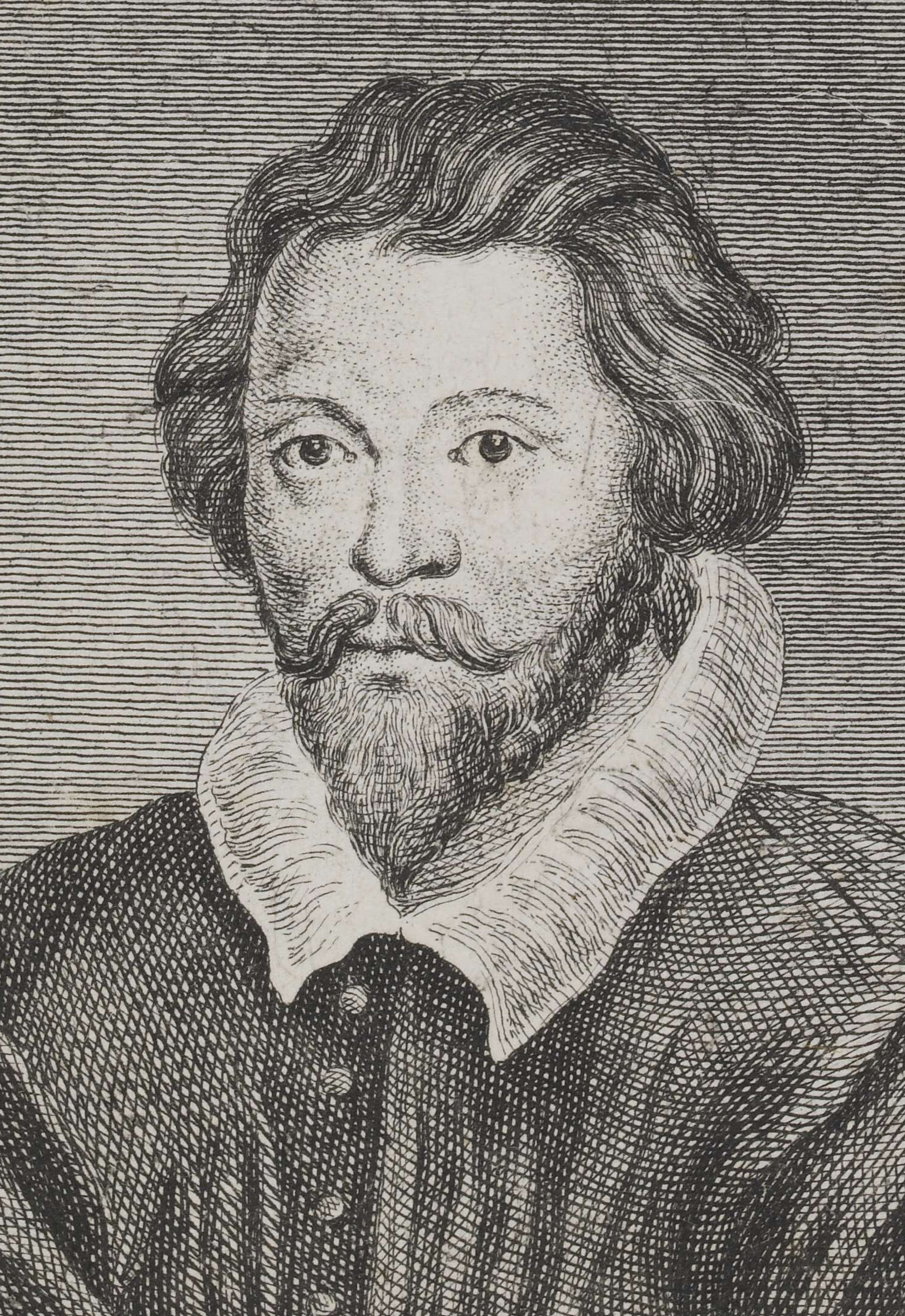
Little is know of Byrd's early life in London, or his early musical training, but his father was a musician. Byrd was a pupil of Thomas Tallis, and his first known professional employment was as organist and master of the choristers at Lincoln Cathedral in 1563. In 1568, Byrd married Julian Birley, and together they produced at least seven children. The 1560's were important and formative years for the composer, and many important works can be assigned to the Lincoln years, including the seven In Nomine settings for consort, at least one of the consort fantasias, and several important keyboard works including the A minor fantasia and the beginnings of Byrd's great series of pavans and galliards. Also, Byrd had begun setting Latin liturgical texts in his early years, and he seems to have continued to do so at Lincoln.
He remained in the post at Lincoln until 1572 when he returned to London, taking the post of chorister of the Royal Chapel, and sharing organ duties with Tallis. This career move gave vast opportunities to Byrd in terms of the scope of his composing. From the early 1570s onwards Byrd had become increasingly involved with Catholicism, and his commitment to the Catholic cause found expression in his motets, of which he composed about 50 between 1575 and 1591. He was also the first Englishman to write madrigals, a form which originated in Italy in the thirteenth century.
Byrd and Tallis shared a close personal and professional relationship, and in 1575 Queen Elizabeth I granted them a patent for the printing of music and rules music paper, for a 21 year duration. Their first work under this new decree was a collection of Cantiones sacrae dedicated to the queen - 34 motets of which Byrd contributed 18, and Tallis 16.
In 1577 Byrd and his family moved to Harlington, Middlesex, where they lived for the next 15 years. Byrd devout Catholicism probably influenced his preference for a more private and quiet life outside of London. In 1585 Thomas Tallis died, as did Byrd's wife a year later. Over the next three years he published four collections of his own music, namely Psalmes, Sonets, & Songs of Sadnes and Pietie (1588), Songs of Sundrie Natures (1589), and two further books of Cantiones sacrae (1589 and 1591). Both volumes of motets were dedicated to two prominent Catholics; the Earl of Worcester, friend and patron to Byrd, and Lord Lumley.
In around 1592 Byrd and his family moved for a final time to Stondon Massey in Essex, where he lived for the rest of his life. James' I ascension of the throne provided a more agreeable climate for Catholics, and in 1607 Byrd took the opportunity to compose and publish a comprehensive body of work for the liturgical repertory; three masses and two Gradualia. This provided material for the Catholic ordinary, and the proper for all main feasts.
Byrd died a wealthy man on 4th July 1623, and received a unique entry in the Royal Chapel Check Book as 'the father of musick'. His considerable output of around 470 compositions included motets, masses and psalms for both the Anglican and Catholic church, and hundreds of pieces for viols and keyboard. Byrd enjoyed a high reputation amongst other musicians, composers and writers of his day. Scribe John Baldwin who was among those who copied Byrd's music wrote:
'Yet let not straingers bragg, nor they these soe commende,
For they may now geve place and sett themselves behynde,
An Englishman, by name, William BIRDE for his skill
Which I shoulde heve sett first, for soe it was my will,
Whose greater skill and knowledge dothe excelle all at this time
And far to strange countries abrode his skill dothe shyne...'
Writer Henry Peacham praised Byrd's sacred music:
'For Motets and musick of piety and devotion, as well as for the honour of our Nation, as the merit of the man, I prefer above all our Phoenix M[aster] William Byrd, whom in that kind, I know not whether any may equall, I am sure none excel...'
Byrd has great influence on later composers, in large part due to his Catholic masses; his music certainly had an influence on Bach and Vivaldi. Ralph Vaughan Williams was influenced by William Byrd, as well as by later composers such as Stravinksy, Bach, Brahms and Debussy.
Gloria, from Mass for Four Voices
This was a very spiritual sounding piece, which is apt given its context. It was pleasant to listen to, but due to its being a sacred work, I think it would resonate more with a Catholic person, who would have an emotional connection to the text.
I heard some nice variance in the dynamics of the work, and the voices weave in and out of each other beautifully, but not as intricate as something you may hear from say the Baroque era. The text of the mass is in Latin, but I followed an English translation in order to get a fuller picture of the meaning of the work.
For My Ladye Nevells Grownde
This work for keyboard was longer than I expected, at around six minutes, but is comprised of several distinct and unique sections. There is extensive use of ornamentation, with several trilled notes in almost every bar. I enjoyed the scalic runs featured in this work, and the triplets section around half way through. I followed the score as I listened, but I'm not sure if this notation was how it was originally written, or if it has been 'translated' to modern notation. The score didn't have a key signature, but the accidentals seemed to be mostly F# and C#, and there was no time signature, but it appeared to be in 4/2. I enjoyed listening to this piece, and it's something I may well learn myself on piano.
The Battell: The Trumpetts
A short piece of only around a minute long, it featured a repeated left hand chord that created a drone effect, with the melody sounding clear above this, perhaps representing the titular trumpets. This uncomplicated and short piece is certainly effective at conjuring a picture in the listeners mind, although more could probably be gained by listening to all the pieces in 'The Battell'.
Though Amaryllis Dance in Green
I found this a light and uplifting madrigal. The voices overlap so much that I wasn't able to discern the words without following along with the text, but the upside was that it created a pleasant and complex musical texture that you could appreciate even if you wasn't able to understand the words. The high soprano in this piece was particularly enjoyable to listen to, as it soared above the rest of the voices.
Ave Verum Corpus
Another spiritual-sounding piece in Latin,a motet based on the text of a Eucharistic hymn, which deals with Jesus' sacrifice suffering. The sombre but reverent mood of the music fits this concept in the text perfectly. Like the Gloria above, emotional attachment to the meaning of the text is needed the fully appreciate the work, although you don't have to be religious to enjoy its velvety harmonies and smooth texture.
Thursday, 12 September 2013
Listening To Madrigals
Thomas Morley - April is in my Mistress' Face
This is a very short English madrigal, at only around a minute and a half. It has a canon-like structure, and has four lines of text:
April is in my mistress' face,
And July in her eyes hath place;
Within her bosom is September,
But in her heart a cold December.
This is clearly secular, and very poetic. The music is very lyrical, with some decoration of the individual melody lines. There is no instrumental accompaniment in this madrigal.
Thomas Morley - Now is the Month of Maying
This is a very bright, lively pleasant sounding madrigal. It is a lighter type of madrigal, called a ballet. It starts with a simple drum rhythm, followed by a flute/whistle-type instrument. Each verse has the same melody, and the refrain features 'nonsense words' - fa-la. The apparent 'spring dancing' theme of the lyrics is actually double-entendre - the madrigal is actually referring to sex.
Thomas Morley - Phyllis, I Fain Would Die Now
This madrigal has a much more somber disposition than the two previous ones, and is also longer, at around four minutes. It consists of a dialogue between two people - Phyllis and her lover Amintas, wherein Amintas professes his love for Phyliss, and his anguish at being turned down. The words of Phyllis are sung by three women in ballett-style, while Amintas is represented by four men in sacred polyphonic style. Only at the conclusion of the madrigal do all seven voices sing together.
John Farmer - Fair Phyllis I Saw Sitting All Alone
A very light and nimble madrigal, on a similar theme to the Thomas Morley madrigal 'Now is the Month of Maying'. The music is polyphonic, and written for four voices, using occasional imitation. It has a quick tempo, and clever use of word painting, the texture of the voices often matching the lyrics, for example a lone soprano singing the first line - Fair Phyllis I saw sitting all alone with the rest of the voices joining in for the next line Feeding her flock near to the mountain side representing the flock.
John Farmer - A Little Pretty Bonny Lass
This madrigal is a simple story of the one that got away. The melody is fairly upbeat, which suggests the rejection was not too upsetting! This light-hearted madrigal features some elements of canon, and some strong examples of imitation between the voices, but the voices sing together more than some of the other madrigals looked at previously.
This is a very short English madrigal, at only around a minute and a half. It has a canon-like structure, and has four lines of text:
April is in my mistress' face,
And July in her eyes hath place;
Within her bosom is September,
But in her heart a cold December.
This is clearly secular, and very poetic. The music is very lyrical, with some decoration of the individual melody lines. There is no instrumental accompaniment in this madrigal.
Thomas Morley - Now is the Month of Maying
This is a very bright, lively pleasant sounding madrigal. It is a lighter type of madrigal, called a ballet. It starts with a simple drum rhythm, followed by a flute/whistle-type instrument. Each verse has the same melody, and the refrain features 'nonsense words' - fa-la. The apparent 'spring dancing' theme of the lyrics is actually double-entendre - the madrigal is actually referring to sex.
Thomas Morley - Phyllis, I Fain Would Die Now
This madrigal has a much more somber disposition than the two previous ones, and is also longer, at around four minutes. It consists of a dialogue between two people - Phyllis and her lover Amintas, wherein Amintas professes his love for Phyliss, and his anguish at being turned down. The words of Phyllis are sung by three women in ballett-style, while Amintas is represented by four men in sacred polyphonic style. Only at the conclusion of the madrigal do all seven voices sing together.
John Farmer - Fair Phyllis I Saw Sitting All Alone
A very light and nimble madrigal, on a similar theme to the Thomas Morley madrigal 'Now is the Month of Maying'. The music is polyphonic, and written for four voices, using occasional imitation. It has a quick tempo, and clever use of word painting, the texture of the voices often matching the lyrics, for example a lone soprano singing the first line - Fair Phyllis I saw sitting all alone with the rest of the voices joining in for the next line Feeding her flock near to the mountain side representing the flock.
John Farmer - A Little Pretty Bonny Lass
This madrigal is a simple story of the one that got away. The melody is fairly upbeat, which suggests the rejection was not too upsetting! This light-hearted madrigal features some elements of canon, and some strong examples of imitation between the voices, but the voices sing together more than some of the other madrigals looked at previously.
Subscribe to:
Posts (Atom)